A septic system that freezes in January is one of the more miserable problems a rural homeowner can have. Drains stop, toilets back up and the ground is too hard to dig. The good news is that most freeze-ups are preventable, and the weeks before snow arrives are the best time to get ready. Here is how to spot the warning signs, what to do if it happens and how to lower the risk in Oro-Medonte, Springwater and Tiny Township.
Why septic systems freeze
A working septic system usually stays warm enough on its own. Wastewater from the house is warmer than the ground, bacteria in the tank give off a little heat, and soil and snow act as insulation. Problems start when one of those things is missing.
Common causes include:
- Not enough water flowing. Seasonal homes, empty houses and households that travel in winter send very little warm water down the line.
- Thin or no snow cover. Snow is good insulation. A cold snap with bare ground lets the frost go deeper.
- Compacted snow. Driving, parking or packing trails over the tank, lines or bed pushes frost down faster.
- Shallow or exposed pipes. The line from the house to the tank, and any pipe that is close to the surface, freezes first.
- Slow leaks. A dripping tap or a toilet that runs a trickle can freeze in the line and build up an ice plug over time.
- Dips in the line. A sag in the pipe holds water, and standing water freezes.
- A tank that is overdue. A full tank leaves less room and can make other problems worse.
Rural lots in Oro-Medonte and Springwater often have long runs between the house and the bed, and many sit on open, windswept fields. That combination is exactly where frost gets deep.
Signs your septic is freezing or frozen
Freeze-ups often start slowly. Watch for:
- Drains that slow down for no obvious reason, especially the lowest ones in the house
- Toilets that gurgle or empty slowly
- Water or sewage backing up into a basement floor drain, shower or tub
- A sewage smell inside or near the tank
- An alarm going off, if your system has a pump chamber or treatment unit
- Ice or wet spots over the tank or bed after a thaw
None of these prove the system is frozen. The same signs can mean a full tank or a blocked line. Either way, it is time to stop heavy water use and call for help.
What to do if you think it’s frozen
The first goal is to stop making it worse.
- Cut back on water use. Skip laundry and long showers. More water into a frozen line only backs up into the house.
- Don’t pour anything down the drain to thaw it. Antifreeze, salt and chemical additives can harm the bacteria in the tank and the soil in your bed, and some are harmful to groundwater.
- Don’t build a fire or use an open flame over the tank or pipes. It doesn’t work well and it isn’t safe.
- Don’t start digging blind. Frozen ground is hard to dig and easy to damage pipes in.
- Call for service. A septic provider can find where the problem is, pump the tank if needed and thaw lines with the right equipment.
The emergency septic service page explains what a winter call usually covers.
What a technician may do
Depending on what they find, a provider may:
- Pump the tank to relieve pressure and stop backups
- Thaw a frozen line using steam or a hot-water jetter
- Check whether a pump, float or alarm has failed
- Recommend a temporary fix to get you through the rest of the winter
A full fix, like replacing or re-grading a pipe, sometimes has to wait until spring when the ground thaws.
How to prevent a freeze-up this winter
Most of the work happens before the first heavy snow.
Mark the tank and lid now
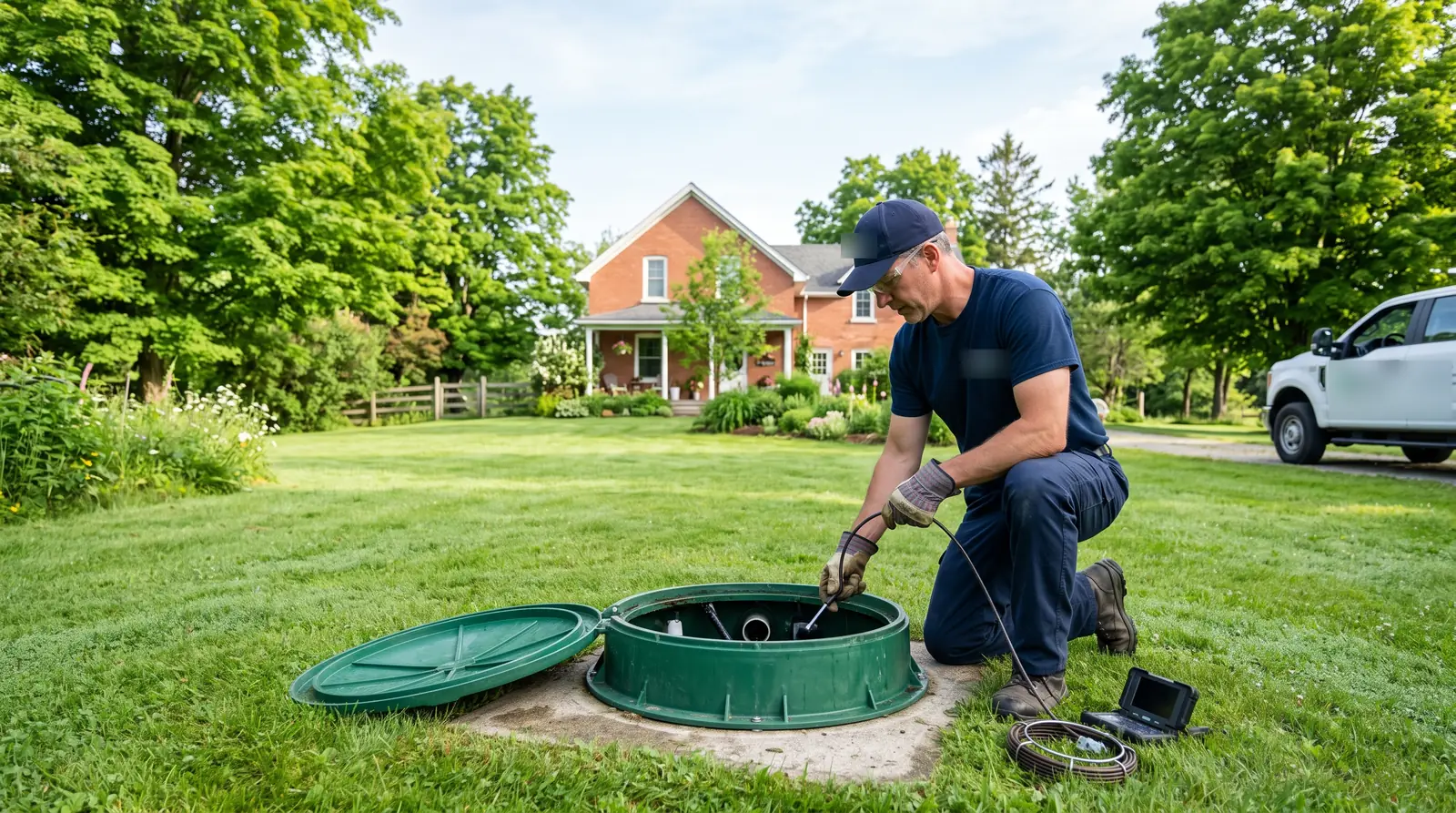
Put a tall stake or flag at the tank lid and along the line before the snow comes. In February, nobody wants to probe a frozen lawn trying to find it. A riser that brings the lid closer to the surface makes winter access much easier. The risers and lids page covers what that involves.
Pump or inspect before freeze-up if you’re due
If your tank is due, get it pumped in the fall while the lid is easy to reach. An inspection at the same visit can catch problems that make freezing more likely, like a sagging line or a failing pump. For timing, see should you pump your septic tank before winter.
Add a layer of insulation
A layer of straw, hay or leaves over the tank and the line, put down before the snow, helps hold heat in. This is especially useful in a new installation where grass hasn’t grown in yet, or in a year with little snow.
Keep snow fluffy, not packed
Let the snow pile up naturally over the tank and bed. Keep cars, trucks, snowmobiles and ATVs off the area. Don’t pack down a toboggan run or skating patch over it.
Keep water moving
In a home that’s lived in, spread water use through the day rather than running everything at once. Fix dripping taps and running toilets before winter.
Plan for an empty house
If a Tiny Township cottage or a Springwater house will sit empty for long stretches, talk to a septic provider about what makes sense for your system. A seasonal cottage that is fully drained and winterized is different from one that’s heated and visited now and then. The Tiny Township area page has more on the local mix of cottages and year-round homes.
What it can cost
A winter emergency call usually costs more than a planned fall visit, because of frozen ground, snow and after-hours work. Planned septic pumping is typically $400–$800 per pump-out for a residential tank, and a standard inspection is typically $100–$300. Those are typical ranges, not quotes. Thawing lines or digging in frozen ground is priced case by case.
Local things worth knowing
- Oro-Medonte: with nearly every home on a private system, and many on open farmland, frost depth and snow cover vary a lot from one property to the next. See the Oro-Medonte area page.
- Springwater: homes around Elmvale, Minesing and Phelpston often have long driveways. Make sure a truck can reach the tank in winter, and keep that path plowed. See the Springwater area page.
Quick answers
Can a septic tank freeze in Ontario?
Yes, though a working system that gets regular use usually doesn’t. Freeze-ups are most common in homes with little water use, thin snow cover, compacted snow over the system or shallow pipes.
Should I put antifreeze in my septic system?
No. Antifreeze, salt and chemical additives can harm the bacteria and the soil that make the system work. If you think it’s frozen, cut back on water use and call a septic provider.
How do you thaw a frozen septic line?
Septic providers usually use steam or a hot-water jetter to thaw the line, and may pump the tank to relieve backups. Some permanent repairs have to wait for spring.
 Emergency backups
 Riser & lid installs
 Septic inspections