A house full of family over the holidays is great for everyone except your septic system. Extra showers, extra laundry, extra dishes and extra toilet flushes all land on a tank and leaching bed sized for your normal household. In winter, with frozen ground and short days, a backup is also harder and slower to fix.
Here’s how to get through the holidays without trouble if your home in Barrie, Innisfil, Oro-Medonte or Orillia is on septic.
Why a full house is hard on a septic system
A septic tank works by holding wastewater long enough for solids to settle to the bottom and grease to float to the top. The clearer liquid in the middle then flows out to the leaching bed, where the soil finishes the job.
When a lot of water arrives in a short time, two things happen:
- Less settling time. Water moves through the tank faster, so more solids and grease can be pushed out toward the bed.
- More water for the bed to absorb. In winter, the soil is cold and biological activity is slower, and a bed that’s already near its limit can struggle.
One busy weekend rarely ruins a healthy system. But a tank that’s overdue for pumping, or a bed that’s already tired, can be tipped over the edge by a week of heavy use.
Before guests arrive
Think about when the tank was last pumped
Most household tanks need pumping every three to five years, depending on tank size and how many people live there. If you can’t remember the last pump-out, or it’s been more than a few years, it’s worth finding out before a big gathering.
Booking a pump-out in December is harder than in the fall, because frozen ground and snow can make the lid hard to reach. If your tank has a riser that brings the lid up to the surface, it’s much easier. A typical residential septic tank pumping costs in the range of $400–$800 per pump-out. That’s a general market range, not a quote.
Fix leaks now
A running toilet or dripping tap adds a steady stream of water to the tank every hour of the day. Before the house fills up, check every toilet for a flapper that doesn’t seal and fix any leaky taps.
Know where your tank and alarm are
If your system has a pump or alarm panel, know where it is and what the lights mean. If the tank lid is under snow, mark its location so it can be found quickly if needed.
While guests are staying
Spread out the laundry
Laundry is one of the biggest single uses of water in a house. Doing five loads on one day sends a surge into the tank. Instead:
- Spread loads across the week, one or two a day at most
- Run full loads instead of half loads
- Hold off on washing all the bedding until after everyone has left, then space it out
Stagger showers
If six people shower back to back every morning, the tank gets a big pulse of water all at once. Encourage shorter showers and, where possible, spread them out between morning and evening.
Go easy in the kitchen
Holiday cooking produces a lot of fats, oils and grease. These are hard on septic systems because they float in the tank and can clog the outlet or the bed.
- Scrape plates into the garbage or compost, not the sink
- Pour cooled grease into a container and throw it out
- Avoid using a garbage disposal heavily, if you have one, since it adds solids to the tank
- Run the dishwasher only when it’s full
Put a note in the bathroom
Guests from the city may never have lived with septic. A small, friendly note in each bathroom helps: only toilet paper goes in the toilet. That means no “flushable” wipes, paper towels, dental floss, cotton swabs or feminine products.
Signs of trouble to watch for
Know the early warning signs, especially with a full house:
- Slow drains in sinks, tubs or showers
- Gurgling sounds from drains or toilets
- Toilets that are slow to flush or back up
- Sewage smells inside or near the tank or bed
- A septic alarm light or buzzer, if your system has one
- Wet or soft spots, or unusual melting in the snow, over the tank or bed
If you notice any of these, cut water use right away. Hold off on laundry, the dishwasher and long showers until you know what’s going on.
If something goes wrong over the holidays
- Stop using water as much as possible. Every flush adds to the problem.
- Don’t open the tank yourself. Septic gases are dangerous and tanks are a fall hazard.
- Check the breaker if your system has a pump. A tripped breaker is a common and easy fix.
- Call for help. Sewage backing up into the house, or an alarm that won’t stop, is worth an emergency septic service call rather than waiting until after the holidays.
In winter, crews may need extra time to locate and dig out a buried lid, which is one reason a riser is worth thinking about later.
After the holidays
Once everyone has gone home:
- Spread out the leftover laundry over several days
- Watch the drains for a week or two for slowness or gurgling
- If you had any warning signs during the visit, book a pump-out or septic inspection once conditions allow
Many owners plan their next pump-out for spring or early fall, when the ground is thawed and the lid is easy to reach.
Local notes
In Barrie and Innisfil, many homes outside the serviced areas are on septic, and some older homes along Lake Simcoe started out as seasonal cottages. If you’re hosting more people than the house was built for, the tips above matter even more. See septic service in Innisfil.
In Oro-Medonte and around Orillia, rural lots and older systems are common. If you’ve recently bought a home and don’t know the system’s history, find out the tank size and last pump-out date. See septic service in Oro-Medonte.
Quick answers
How many extra people can a septic system handle?
It depends on the tank size, the bed and how well the system has been maintained. A healthy system can usually handle a busy holiday visit if water use is spread out. A tank that’s overdue for pumping, or a bed that’s already struggling, is much more likely to have problems.
Should I pump my septic tank before the holidays?
If it’s been more than three to five years, or you don’t know when it was last pumped, it’s a good idea. The fall is the best time, before the ground freezes. In December it’s still possible, but snow and frozen ground can make the lid harder to reach.
What should guests not flush on a septic system?
Only toilet paper should go in the toilet. Wipes, even ones labelled flushable, paper towels, floss, cotton swabs and feminine products can clog the tank outlet or the bed. A small note in each bathroom helps.
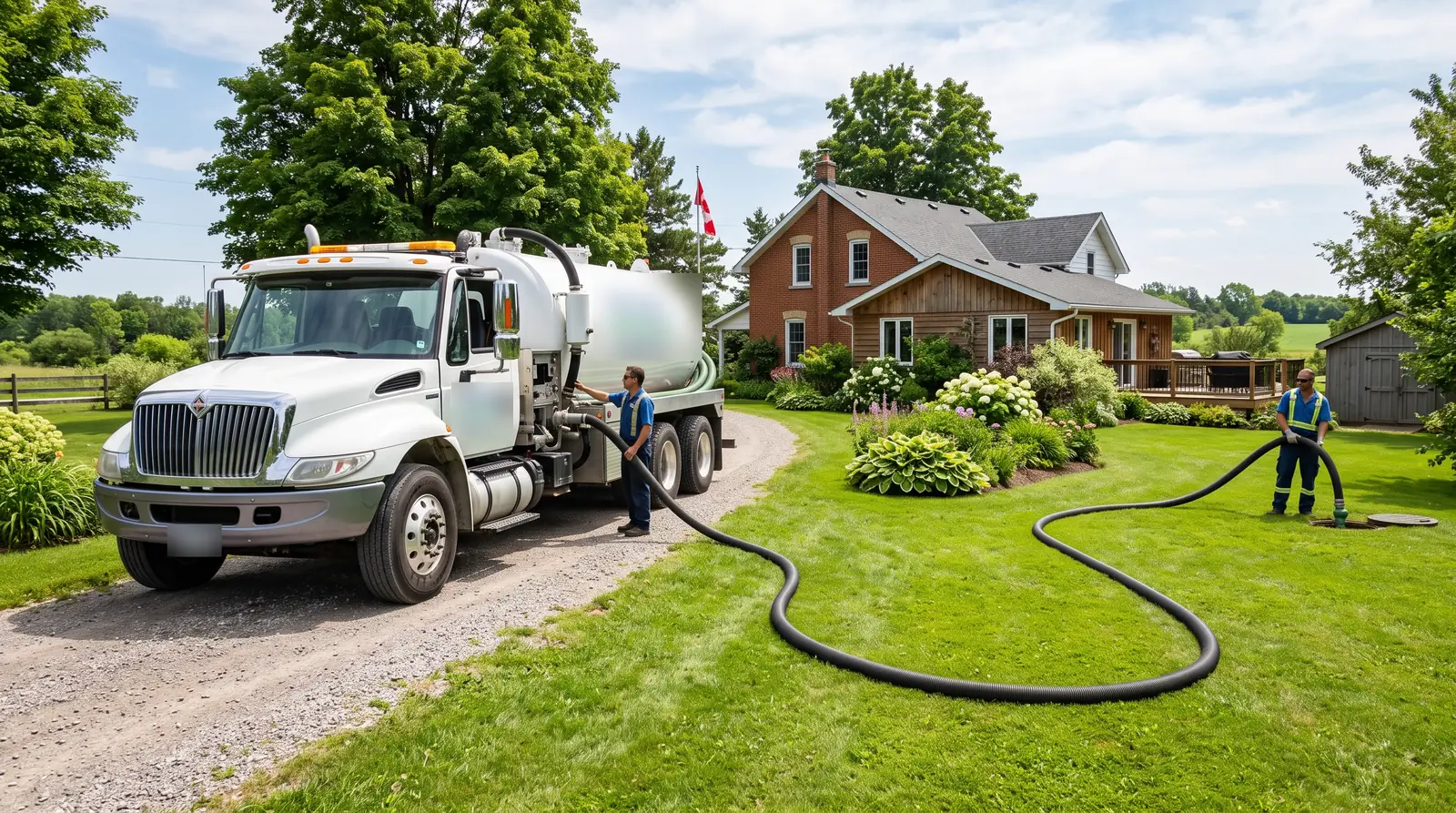 Septic tank pumping
 Emergency backups
 Septic inspections