If your septic tank is due or close to due, fall is the best time in Simcoe County to get it pumped. Once the ground freezes and the snow piles up, the same job gets slower, messier and harder to book. Here is how to tell whether you need a pump-out this fall, and how to set your system up for a quiet winter.
Why fall pumping makes sense here
Septic tanks don’t care what month it is. The case for fall comes down to access and timing.
Frozen ground and buried lids
Most older tanks in the county have lids buried somewhere under the lawn. In September or October, digging down to them takes a shovel and a bit of patience. By January the top layer of soil can be frozen hard, and the lid may be under a metre of plowed snow. Every extra minute of digging and thawing adds to the bill, and some sites simply can’t be reached until spring.
Truck access
A pump truck is heavy. In fall it can usually back down a driveway or cottage lane without trouble. In winter, unplowed lanes, icy slopes and narrow cottage roads in places like Tiny Township can keep the truck too far from the tank, or keep it away altogether.
Holiday guests
Thanksgiving, Christmas and March Break bring extra people, showers and laundry. A tank that is already close to full is far more likely to back up when the house is busy, and a winter emergency call costs more than a planned fall visit.
Signs your tank is due now
Don’t wait for a backup. Book a pump-out this fall if any of these apply:
- It has been 3 years or more since the last pump-out
- You bought the home recently and don’t know when it was last pumped
- Drains are slow all over the house, not just in one sink
- Toilets or sinks gurgle when water drains elsewhere
- You notice a sewage smell near the tank or the leaching bed
- The ground over the bed is soggy, or the grass there is greener than the rest of the lawn
- Water has backed up into the basement or the lowest drain
Slow drains in one fixture usually point to a clog in that line. Slow drains everywhere point to the tank or the bed.
How often to pump, by household size
The right interval depends on tank size and how much water goes through it. These are general guidelines for a typical household tank:
| Household | Typical pumping interval |
|---|---|
| 1–2 people | every 4–6 years |
| 3–4 people | every 3–4 years |
| 5+ people | every 2–3 years |
| Seasonal cottage | every 4–6 years |
Older cottages often have smaller tanks that fill faster than these numbers suggest. A garbage disposal, a water softener that backwashes into the system, or lots of weekend guests can also shorten the cycle. If you’re not sure, ask your provider to note the sludge and scum levels at the next pump-out. That gives you a real interval for your own system.
What it typically costs
For a typical residential tank, a pump-out usually falls in the range of $400–$800. That is a typical market range, not a quote. Your price depends on tank size, how deep the lid is buried, how far the truck is from the tank and travel distance to your property. See septic tank pumping for what a standard visit includes.
How to prepare for a fall pump-out
A little prep saves time on the day and can lower the cost.
Find and mark the lid
- Check your house records or the original permit drawings. Your township may have the system layout on file.
- Look for a slight rise, a sunken patch or a cleanout pipe in the yard, usually a few metres from where the main drain leaves the house.
- Once you find it, mark it with a tall stake or a fibreglass driveway marker that will still show above the snow.
If you can’t find it, tell your provider when you book. The operator can help locate it, but it may take longer.
Consider a riser
If you dig up the lid every few years, a riser is worth pricing. It extends the tank access to ground level with a secure, locking lid, so future pump-outs and inspections skip the digging. Fall is a good time to add one because the tank is already uncovered during the pump-out. More on septic risers and lids.
Pair it with an inspection
Several Simcoe County municipalities run septic re-inspection or maintenance programs, including Tiny Township, Innisfil and Oro-Medonte. If you’ve had a notice, or expect one, ask for a septic inspection at the same visit. Pumping lets the inspector see the tank walls and baffles properly. Check your own township’s website or notice letter for what it actually requires, since programs differ from one municipality to the next.
Cottage vs. year-round homes
Seasonal cottages
An empty cottage adds nothing to the tank over winter, but solids still build up over the summer. Pumping at closing time is convenient: the lane is still open and you’re already up there.
Talk to your provider about how much liquid to leave or refill in the tank. Practice varies, so follow their advice for your setup. If your cottage is getting a full winterizing, make sure the person closing it knows about any septic traps, pumps or lines that need attention.
Year-round homes
A home in use all winter keeps warm water flowing through the system, which helps it stay working. The main risk is a tank that is close to full going into the busiest season for guests. If you’re within a year of your normal interval, pumping now is cheaper and simpler than taking a chance until spring.
For year-round homes in rural parts of Springwater or Oro-Medonte, where tanks are often set well back from the house, a marked lid or a riser matters even more once snow arrives.
What to avoid over winter
Septic systems in Ontario generally keep working through winter, as long as nothing interferes with them. A few habits make a difference.
Don’t compact the snow over the bed
Snow is natural insulation. Fluffy snow over the tank and leaching bed helps keep the frost from going deep. Packed snow does the opposite.
- Don’t park, plow or pile snow on the tank or bed
- Keep snowmobiles, ATVs and heavy foot traffic off the bed
- Don’t use the bed area as a skating rink or toboggan run
Protect the lines from freezing
- Fix dripping taps and running toilets. A slow trickle can freeze in the line before it reaches the tank.
- Avoid leaving the house empty with the heat off unless the plumbing has been properly winterized.
- If a pipe or vent is exposed, ask your provider about insulating it.
Spread out water use
Space out laundry over the week and avoid running the dishwasher, washer and showers at the same time when the house is full.
Quick answers
Is it bad to pump a septic tank in winter?
It isn’t bad for the tank, but it is often harder and more expensive. Frozen ground, buried lids and snowy lanes slow the job down, so most owners in Simcoe County plan pump-outs for spring or fall and save winter for emergencies.
How late in the fall can I get my septic pumped?
Aim to book in September or October, before the ground freezes. Once hard frost and snow arrive, usually in November or December, many properties become difficult to service until spring.
Will a full tank freeze over winter?
A working tank is rarely the part that freezes. The usual trouble spots are shallow or exposed lines, a slow trickle from a leaking fixture, or compacted snow over the bed. A full tank is more likely to back up than freeze, which is the main reason to pump it before winter.
Related services
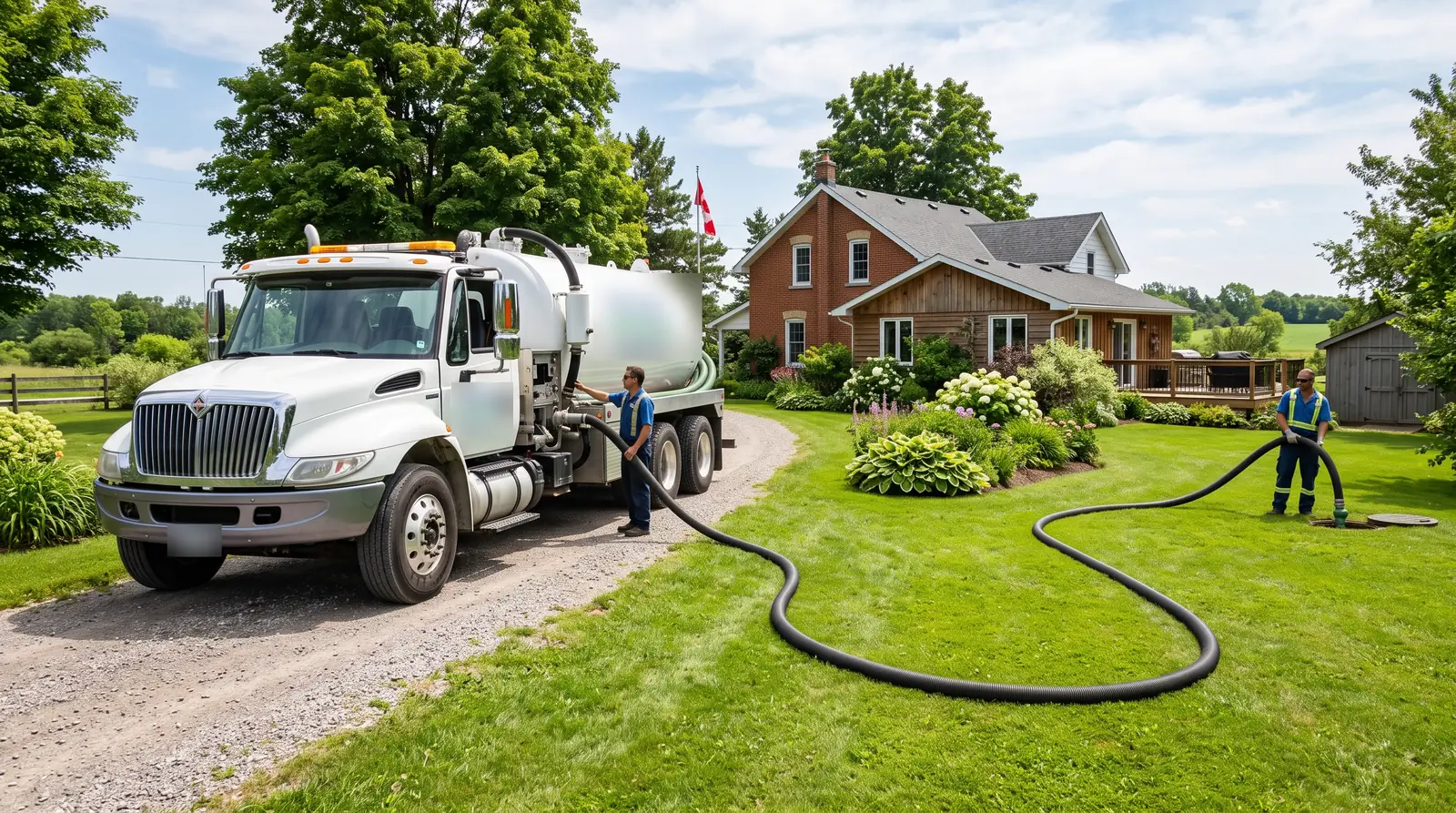 Septic tank pumpingFull pump-out of your tank with a quick check of baffles and levels while the lid is open.
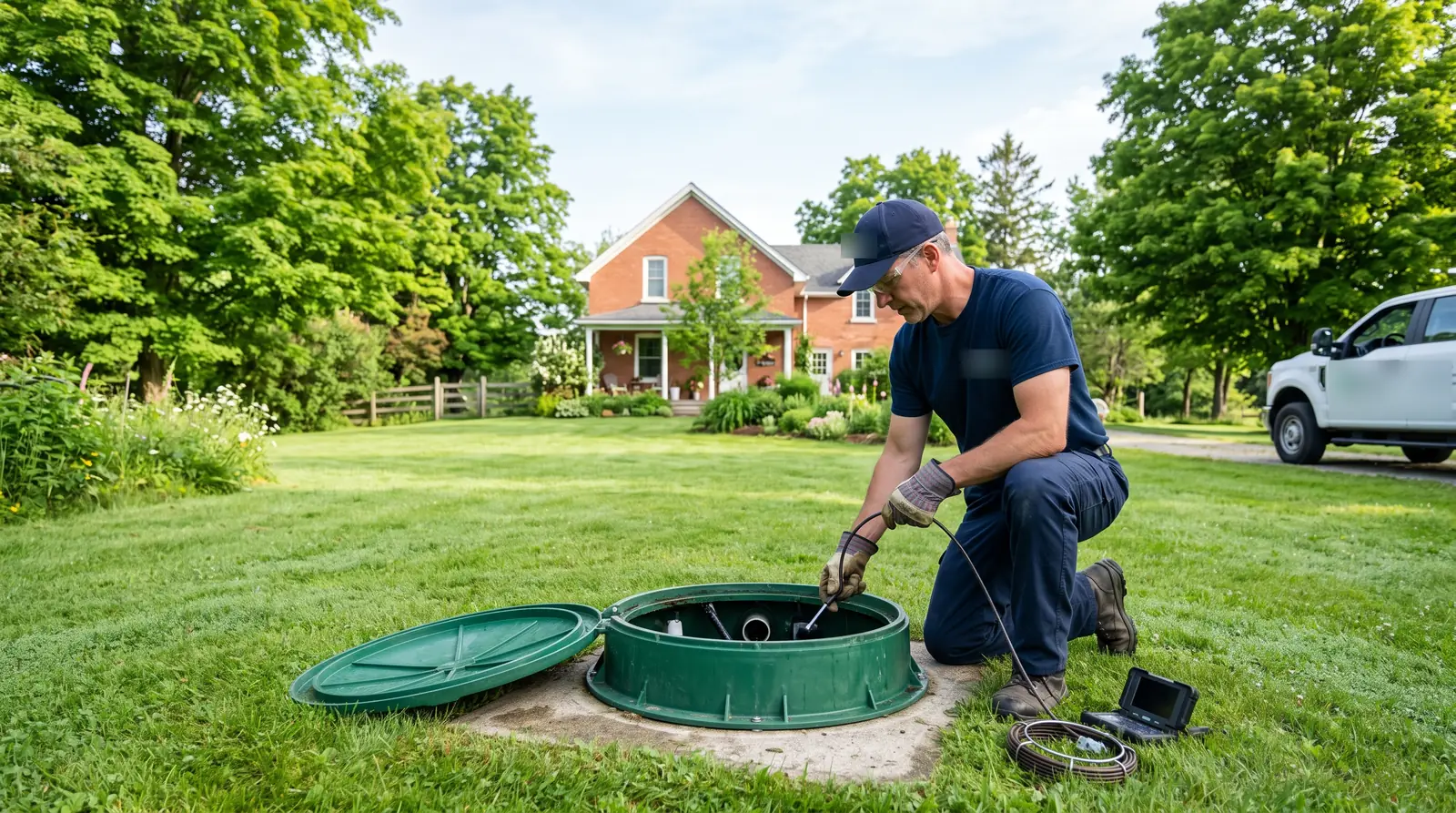 Riser & lid installsBring your tank lid to the surface so future pump-outs are faster, cleaner and cheaper.
 Septic inspectionsBuying or selling? Get a clear inspection of the tank and system condition.