Walk down the cleaning aisle of any hardware store in Barrie and you’ll find septic tank additives promising to break down waste, prevent backups and cut down on pumping. Some people swear by a monthly packet, and others flush yeast down the toilet. So do they actually work?
The short answer: a healthy septic system doesn’t need them, and no additive replaces regular pumping. Here’s what additives are, what they can and can’t do, and what actually keeps a system in Barrie, Springwater, Innisfil or Oro-Medonte running well through the winter.
How a septic tank already works
A septic tank is a holding tank where wastewater separates into layers:
- Sludge settles to the bottom.
- Scum, mostly grease and fats, floats to the top.
- Clearer liquid in the middle flows out to the leaching bed, where the soil finishes treating it.
Bacteria that live naturally in the tank break down some of the solids. Those bacteria come from normal household waste every day, so a working system keeps restocking itself. Not everything breaks down, though. Over time, the sludge and scum layers build up, and the only way to remove them is to pump the tank.
What septic additives are
Additives fall into a few broad groups:
- Biological additives. Bacteria, enzymes or yeast meant to boost the natural breakdown in the tank.
- Chemical additives. Products meant to break down grease, clear clogs or dissolve solids.
- “Starter” or “shock” products. Sold for new systems, after pumping or after a backup.
Some are packets you flush, some are liquids and some are powders.
What the research and regulators say
Public guidance from environmental agencies and university extension programs is fairly consistent: additives aren’t needed for a properly working system, and they don’t remove the need for pumping. The U.S. Environmental Protection Agency’s fact sheet on septic tank additives, for example, says additives are not recommended, because septic systems already contain the bacteria and other microorganisms they need to work. Its maintenance advice is regular inspection and pumping, not products.
The main concerns raised are:
- Bacteria are already there. Normal household waste supplies far more bacteria than a small packet adds.
- Breaking down solids can push them out. If an additive breaks up the sludge or scum, some of it can be carried out of the tank and into the leaching bed, where it can clog the soil. A bed is much harder and more expensive to fix than a tank.
- Harsh chemicals can harm the system. Strong chemical products can kill the helpful bacteria in the tank and may harm groundwater.
- False confidence. The biggest risk is that someone uses an additive instead of pumping, and the tank fills with solids until something fails.
Do additives help in winter?
Some products are marketed as a way to keep a septic system from freezing. There’s no packet that will stop a system from freezing. Freezing happens because of cold air reaching the pipes and tank, a lack of snow cover, compacted snow over the lines, or too little warm water moving through the system, which is common in empty cottages and homes where the owners are away.
What actually helps in winter:
- Keep water moving. Regular, normal use sends warm water through the pipes.
- Leave snow alone over the tank and bed. Fluffy snow insulates. Don’t plow it, park on it or drive snowmobiles over it.
- Fix dripping taps and running toilets. A slow trickle can freeze in the line.
- Plan for an empty house. If you’ll be away for weeks, talk to a septic professional about what makes sense for your system.
What about yeast, sugar or “home remedies”?
Flushing yeast, sugar or other kitchen items is an old habit that still gets passed around. For a normal system, it doesn’t do anything useful, because the tank already has the bacteria it needs. It won’t cause much harm in small amounts, but it won’t make a full tank any less full.
What actually keeps a septic system healthy
Pump on a regular schedule
Most household tanks need pumping every three to five years, depending on tank size and how many people live in the house. Heavier use, like a full house year-round or a garburator, means more often. A typical residential septic tank pumping runs in the range of $400–$800 per pump-out. That’s a general market range, not a quote.
Get it inspected
An inspection checks the tank, baffles, filters and the condition of the bed, and can measure how much sludge and scum have built up. That tells you whether you’re due for pumping or can wait. A standard septic inspection typically runs in the range of $100–$300, and it’s often combined with a pump-out.
Watch what goes down the drain
Most septic problems start with things that never should have gone in:
- Grease and cooking oil
- Wipes, even “flushable” ones
- Paper towels, feminine products and cotton swabs
- Paint, solvents and harsh cleaners
- Medications
- Large amounts of bleach or antibacterial products
Normal amounts of household cleaners are generally fine. The trouble comes from large amounts poured down at once.
Spread out water use
Laundry is the big one. Doing five loads on a Saturday sends a lot of water into the tank at once, which can push solids out to the bed. Spreading laundry over the week is easier on the system.
Protect the leaching bed
Don’t park, build, plant trees or drive heavy equipment on the bed. Keep downspouts and sump pump discharge away from it.
When to call instead of buying an additive
If you’re thinking about an additive because something seems wrong, that’s usually a sign you need a professional instead. Call if you notice:
- Slow drains or gurgling in more than one fixture
- Sewage smells in the house or yard
- Wet or spongy ground over the bed, or ground that stays green while the rest browns
- Water backing up into the lowest drains
- A septic alarm going off
In winter, a backup can’t wait until spring. If sewage is coming into the house, call for emergency septic service.
Local notes
In rural Barrie, Springwater and Oro-Medonte, most homes outside town centres rely on private septic systems, and many are older systems installed decades ago. In Innisfil, older lakefront cottages sit near newer subdivisions on municipal sewer, so it’s worth confirming which you have if you’ve recently bought. Some municipalities around Lake Simcoe run septic re-inspection or maintenance programs, so check with your township about what applies to your property.
For local information, see septic services in Barrie.
Quick answers
Do septic tank additives work?
For a healthy system, they aren’t needed. Public guidance from environmental agencies says household waste supplies plenty of bacteria, and no additive replaces regular pumping. Some products can even push solids out to the leaching bed.
Can an additive keep my septic from freezing?
No. Freezing is caused by cold reaching the pipes and tank, compacted snow and too little warm water moving through. Regular use, undisturbed snow cover and fixing drips are what help.
How often should I pump instead?
Most household tanks need pumping every three to five years, depending on tank size and how many people use it. An inspection can measure how full your tank is and tell you whether you’re due.
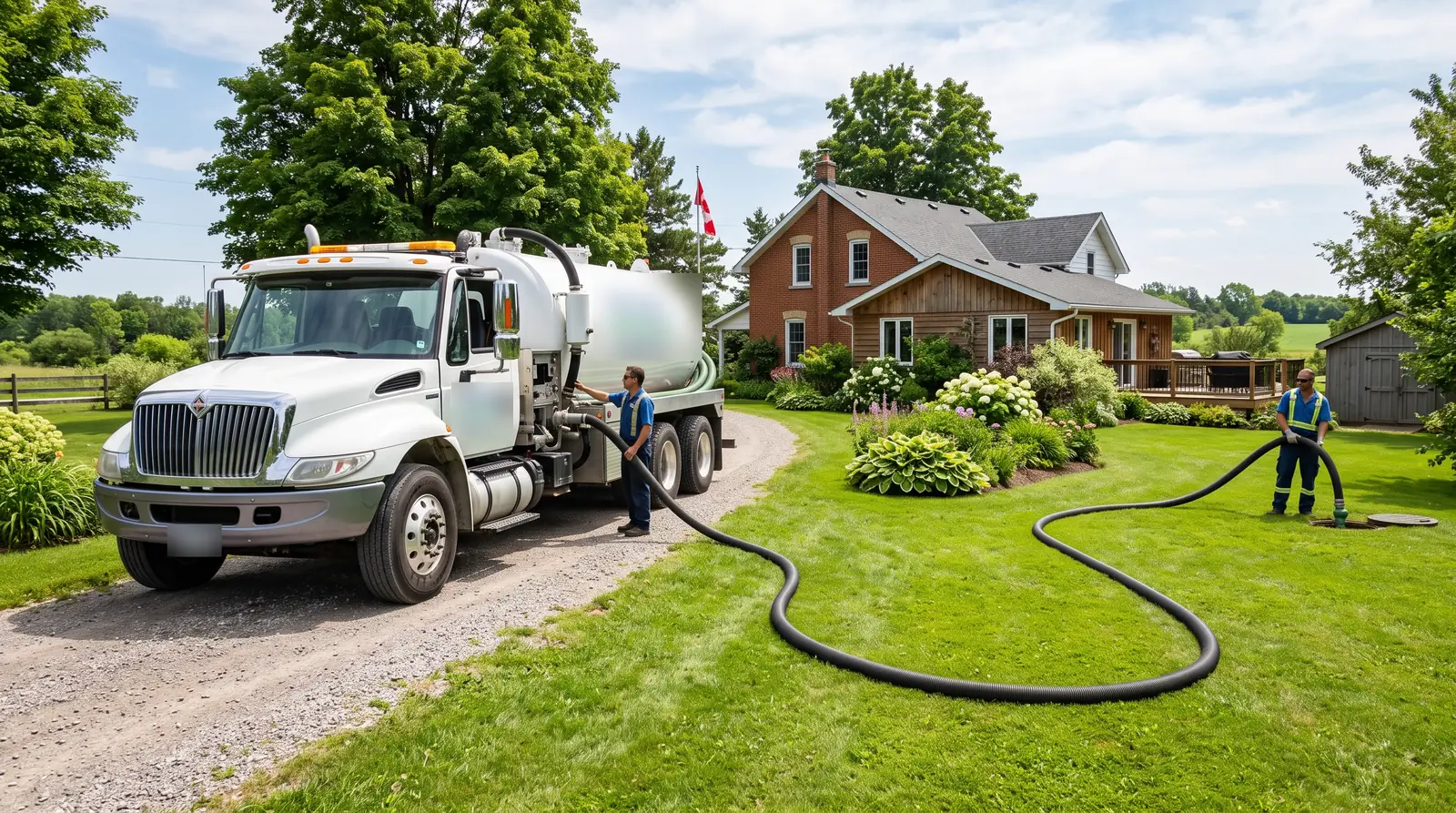 Septic tank pumping
 Septic inspections
 Emergency backups