If you have never had your septic tank pumped, it is fair to wonder how long the truck will be in your driveway and whether you need to stay home. For most homes, the pumping itself is the quick part. What takes time is finding the tank, digging to the lid and getting the hose to it. Here is what to expect on the day in Barrie, Innisfil, Orillia and the surrounding townships.
The short answer
For a typical household tank with a lid that is easy to reach, the whole visit is often done in about an hour, sometimes less. The actual pumping usually takes a fraction of that.
The visit gets longer when:
- Nobody knows exactly where the tank is
- The lid is buried deep under lawn or garden
- The truck can’t park close to the tank
- The tank is large, has two compartments, or hasn’t been pumped in many years
- An inspection is done at the same visit
A buried lid on an older rural property can easily add more time than the pumping itself. That is why a little prep makes such a difference.
What happens during a pump-out, step by step
Every provider works a little differently, but most visits follow the same pattern.
1. Finding the tank
The technician first needs to find the tank and its access lid. If you have a riser that comes up to the surface, this takes seconds. If not, they may probe the ground, follow the main sewer line out from the house, or use records from a previous pump-out.
2. Uncovering the lid
Without a riser, someone has to dig down to the lid. Depending on how deep it sits, that might be a few shovelfuls or a real hole. Older homes in places like Innisfil’s lakefront streets or the rural edges of Barrie often have lids that were buried long ago and forgotten.
3. Pumping the tank
The hose runs from the truck to the tank. The technician usually breaks up the floating scum layer and the settled sludge so that the solids come out, not just the liquid. Pumping only the liquid off the top doesn’t do the job.
On a two-compartment tank, both sides need to be pumped, which usually means two lids.
4. A quick look inside
Once the tank is empty, a good technician takes a look at what they can see: the inlet and outlet, baffles, any visible cracks and whether water is flowing back into the tank from the house or the bed. If something looks off, they should tell you.
If you book septic inspections at the same time, this step is more detailed and the visit runs longer.
5. Closing up
The lid goes back on and the hole is backfilled. You should get a record or receipt showing the date and what was done. Keep it. It is the first thing the next technician, or a future buyer, will want to see.
What slows a pump-out down
Some delays are out of your control. Many aren’t.
| Situation | Effect on the visit |
|---|---|
| Riser lid at ground level | Fastest. Pumping starts almost right away. |
| Lid buried a little and location known | Adds some digging time |
| Lid buried deep and location unknown | Can add a lot of time, and may add to the cost |
| Truck parked far from the tank | Longer hose runs and setup |
| Very full tank with hard sludge | Takes longer to break up and remove |
| Frozen ground or deep snow | Much slower, and sometimes not possible until spring |
If your visit always involves a lot of digging, a riser is worth a look. Septic risers and lids bring the access up to ground level, so future pump-outs and inspections start straight away.
How to make the visit faster
You can cut a lot of time off the visit with a few minutes of prep.
- Find your records. A past receipt, a property sketch or the septic permit from when the system was installed often shows where the tank sits.
- Mark the spot. If you know where the lid is, put a stake or flag on it.
- Clear the way. Move vehicles, trailers and anything else between the driveway and the tank.
- Uncover it yourself if you can. Some homeowners dig down to the lid before the truck arrives. Ask your provider whether that helps and how close to get.
- Unlock gates and keep pets inside.
Do you need to be home?
Not always. If the tank is easy to find and the truck can get to it, many providers can do the job without you there. It still helps to be home the first time, so you can show them where things are and ask questions.
Either way, make sure they know about anything unusual, like a pump chamber, a second tank or a shared system.
What it typically costs
For a typical residential tank, a pump-out usually falls in the range of $400–$800. That is a typical market range, not a quote. Tank size, how deep the lid is buried, how far the truck is from the tank and travel distance all affect the price. See septic tank pumping for what a standard visit includes.
A standard inspection typically runs $100–$300, and it is often combined with a pump-out so the tank only needs to be opened once.
After the pump-out
There is nothing special you need to do after the truck leaves. The tank starts filling again as soon as you use water, which is normal.
A few habits help the system recover and last:
- Spread laundry out over the week instead of doing it all in one day
- Fix leaking toilets and taps, which can send a lot of extra water into the tank
- Keep grease, wipes and harsh chemicals out of the drains
- Don’t drive or park on the tank or the leaching bed
Ask the technician how full the tank was. If it was very full, you may want to pump more often than you have been.
Booking before the ground freezes
In Barrie, Innisfil and Orillia, fall is the easiest time of year to get this done. The ground is soft enough to dig, lanes are clear and lids are easy to reach. Once the snow arrives, the same job gets slower and harder to book. For local details, see the Barrie area page.
Quick answers
How long does a septic pump-out take?
For a typical household tank with an easy-to-reach lid, the visit is often done in about an hour. Finding and digging up a buried lid is what usually makes it take longer.
Do I need to be home when my septic tank is pumped?
Not always. If the tank is marked and the truck can reach it, many providers can work without you. It helps to be there for the first visit so you can show them the tank and ask questions.
Can I use water during a septic pump-out?
It is best to keep water use to a minimum while the tank is open and being pumped. Once the lid is back on, you can use water normally.
Related services
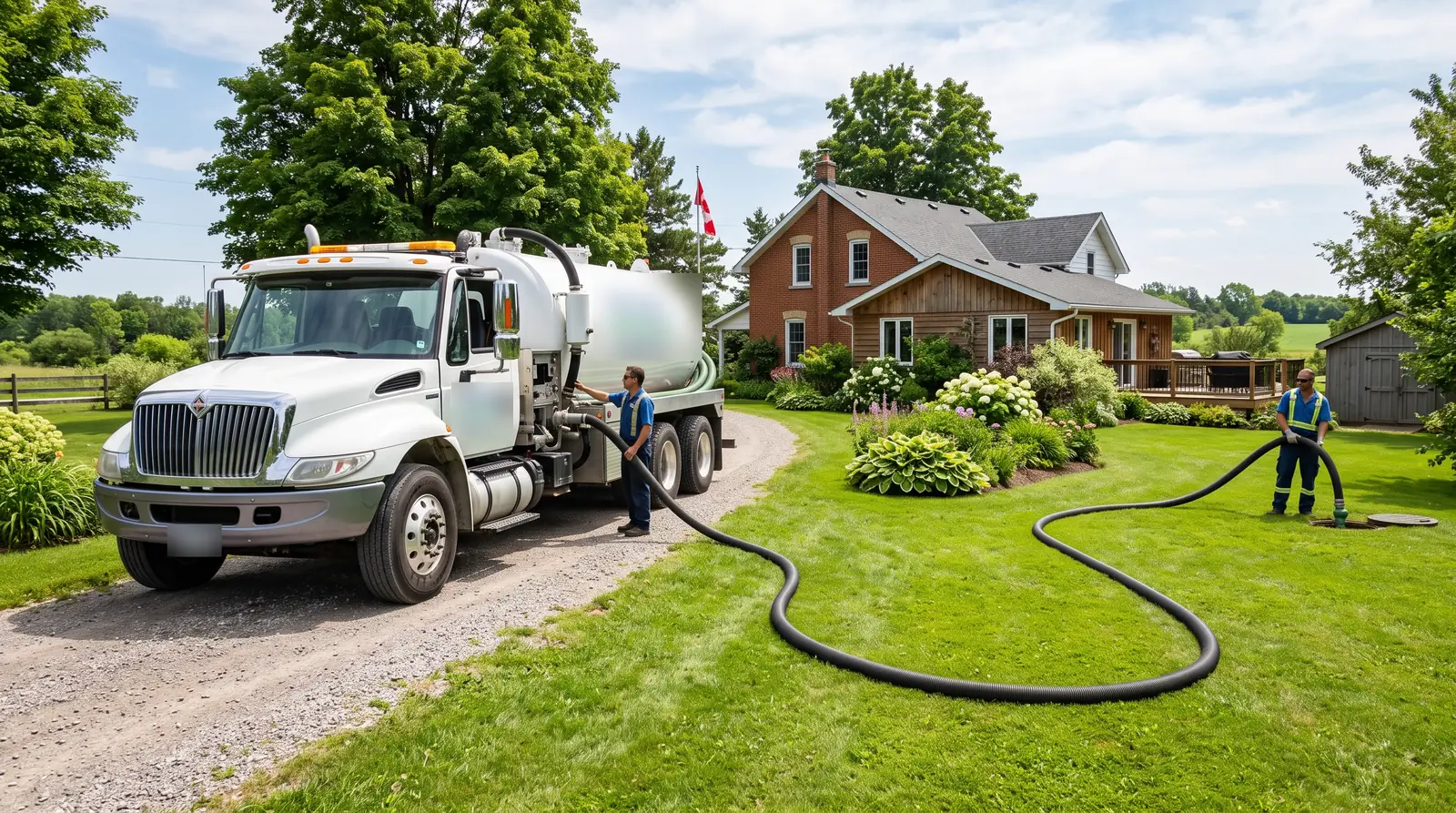 Septic tank pumpingFull pump-out of your tank with a quick check of baffles and levels while the lid is open.
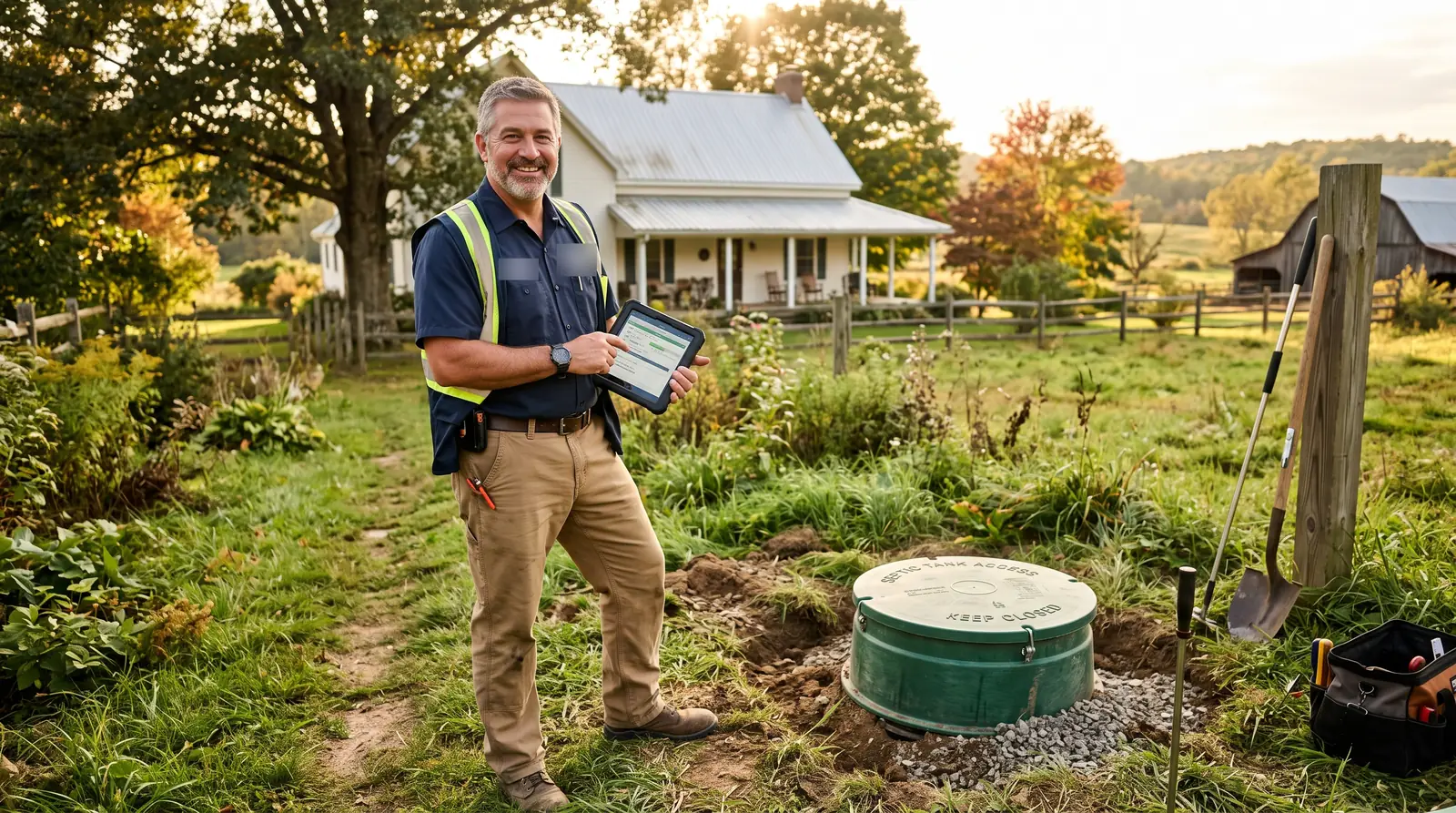 Septic inspectionsBuying or selling? Get a clear inspection of the tank and system condition.
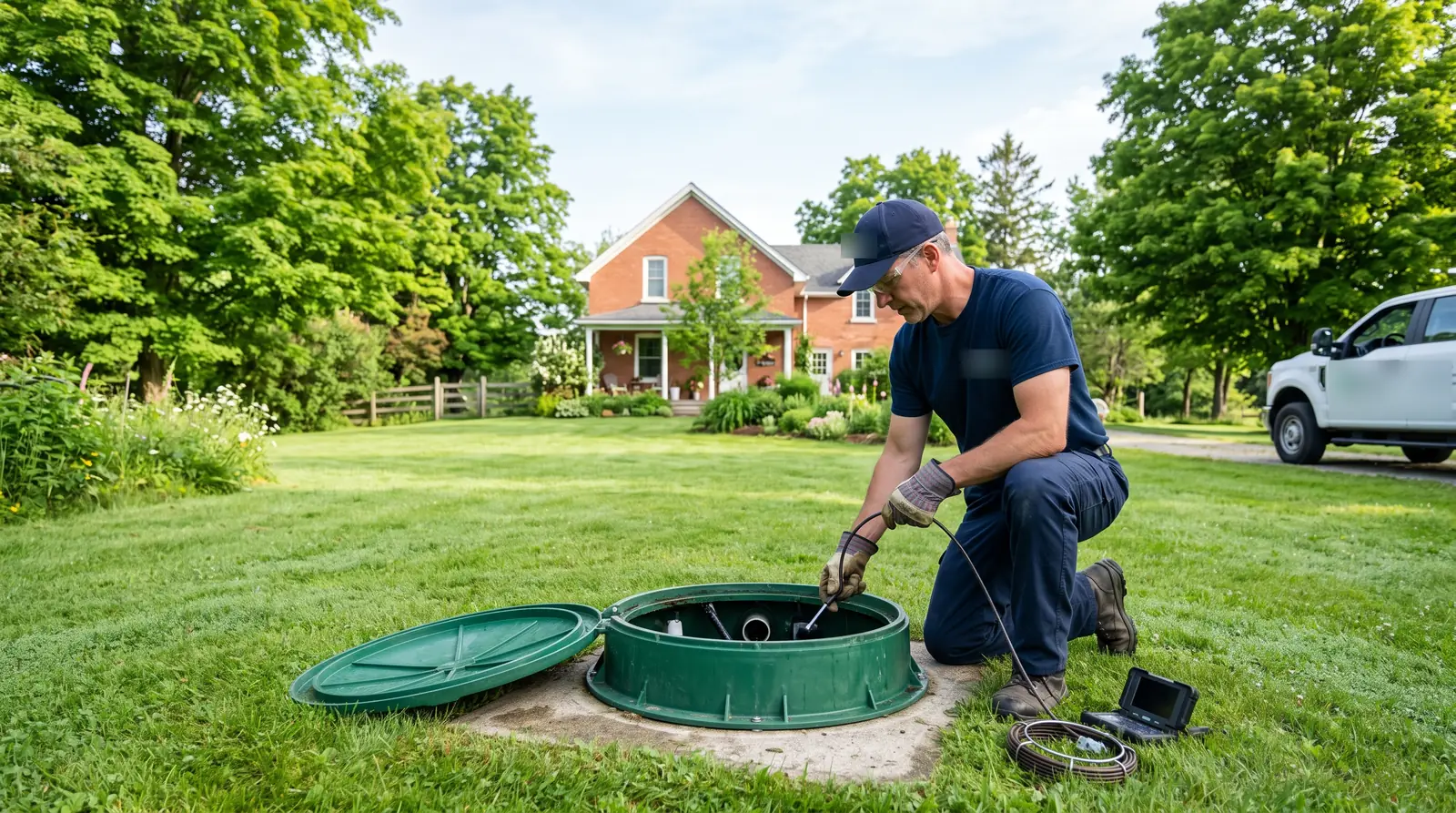 Riser & lid installsBring your tank lid to the surface so future pump-outs are faster, cleaner and cheaper.